What Makes a Corrugated Box the Best One for the Job
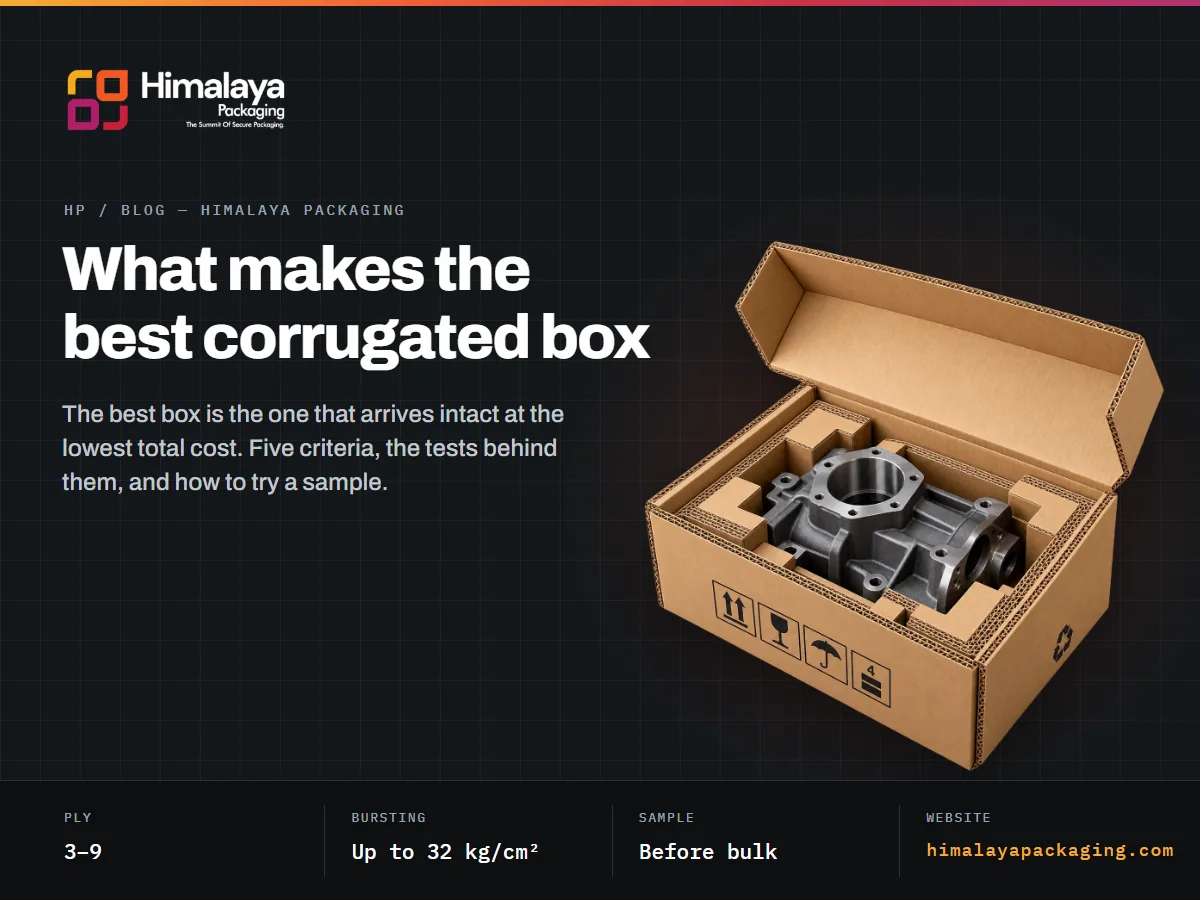
There is no best corrugated box in general — only the best box for a particular load, stack and route. It is the one that delivers the product intact, every time, for the lowest total cost, including the cost of the damage it prevents. That can be measured, and much of it can be tested before you order in bulk.
Five criteria for the best box
- Fit. The product is held without room to move and without being forced.
- Strength for the stack. The box carries the weight above it for as long as it is stored.
- Resistance to the route. It survives the drops, punctures and humidity of the journey.
- Consistency. The hundredth box, and the tenth order, match the sample you approved.
- Cost per safe delivery. The price of the box plus the cost of the damage it fails to prevent.
A cheaper box that fails occasionally is rarely the cheaper box. A stronger box than the job needs is not better either — it is extra board on every order.
The tests that measure a box
| Test | What it measures | Where it matters |
|---|---|---|
| Bursting strength | Pressure the board takes before it ruptures | Handling, rough treatment |
| Edge crush (ECT) | Load the board carries on its edge | Estimating stacking strength |
| Box compression (BCT) | Load the finished box takes before it buckles | Pallet stacks, warehouse storage |
| Cobb | Water the board surface absorbs in a set time | Humid routes, cold storage, produce |
| GSM | Weight of each paper | Checking a delivery against the specification |
| Drop test | Whether the contents survive falls | Fragile goods, manual handling |
Ask any supplier which of these they measure, and how. Our quality page sets out what every one of our specifications states.
How to test a sample yourself
A laboratory gives numbers; your own trial shows how the box behaves with your product.
- Pack it for real — the actual product, the insert, the tape, closed as your line will close it.
- Stack test. Put the weight of a full stack on top and leave it for a day or two. Look for bulging walls and buckled corners.
- Drop test. Drop the packed box from handling height onto a corner, an edge and a face. Open it and check the product.
- Humidity. If the route is humid, leave a packed box in the most humid place you have and repeat the stack test.
- Check the specification — measure the internal dimensions, count the ply, and compare with the quote.
Consistency is part of quality
A sample proves a design; consistency proves a supplier. The box that arrives months later should be made to the same approved specification — the same ply, grade, flute and dimensions — as the one you tested. That is only possible when the specification is written down and every repeat order is made to it.
How we make the best box for your load
At our plant in Bakrol Bujrang, Ahmedabad, every order starts from the load: part weight, stacking height, route and handling. We specify ply (3 to 9), board grade, flute and bursting strength in writing, you test a physical sample with your own product, and repeat orders are made to the approved specification. See our heavy duty boxes and corrugated boxes.
 The product behind this article
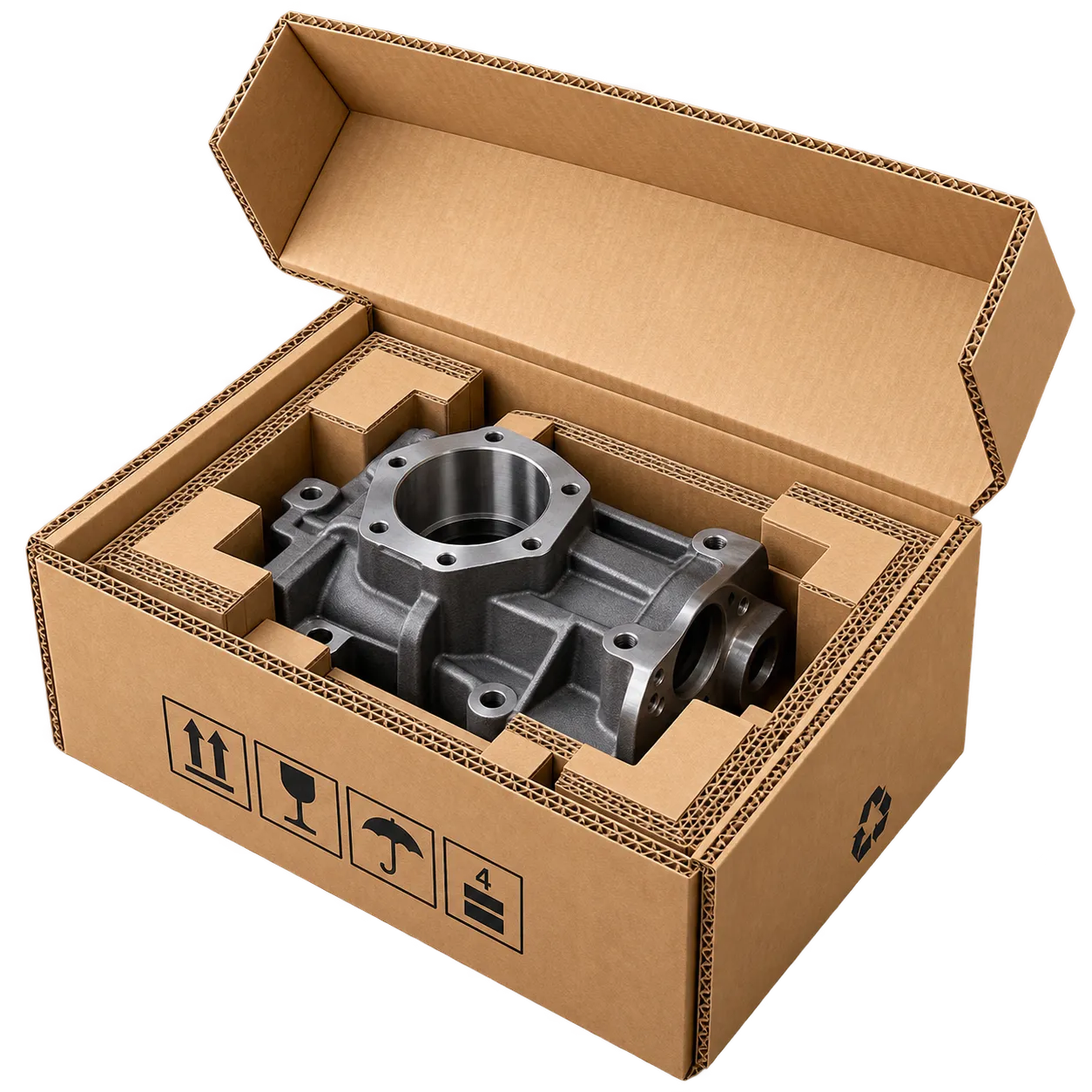
Heavy Duty Boxes
For castings, machinery parts and any load that would crush a standard carton.
5–9 ply
to 32 kg/cm²
Custom sizes
The product behind this article
Heavy Duty Boxes
For castings, machinery parts and any load that would crush a standard carton.
5–9 ply
to 32 kg/cm²
Custom sizes