The Importance of Cardboard Packaging in Modern Shipping
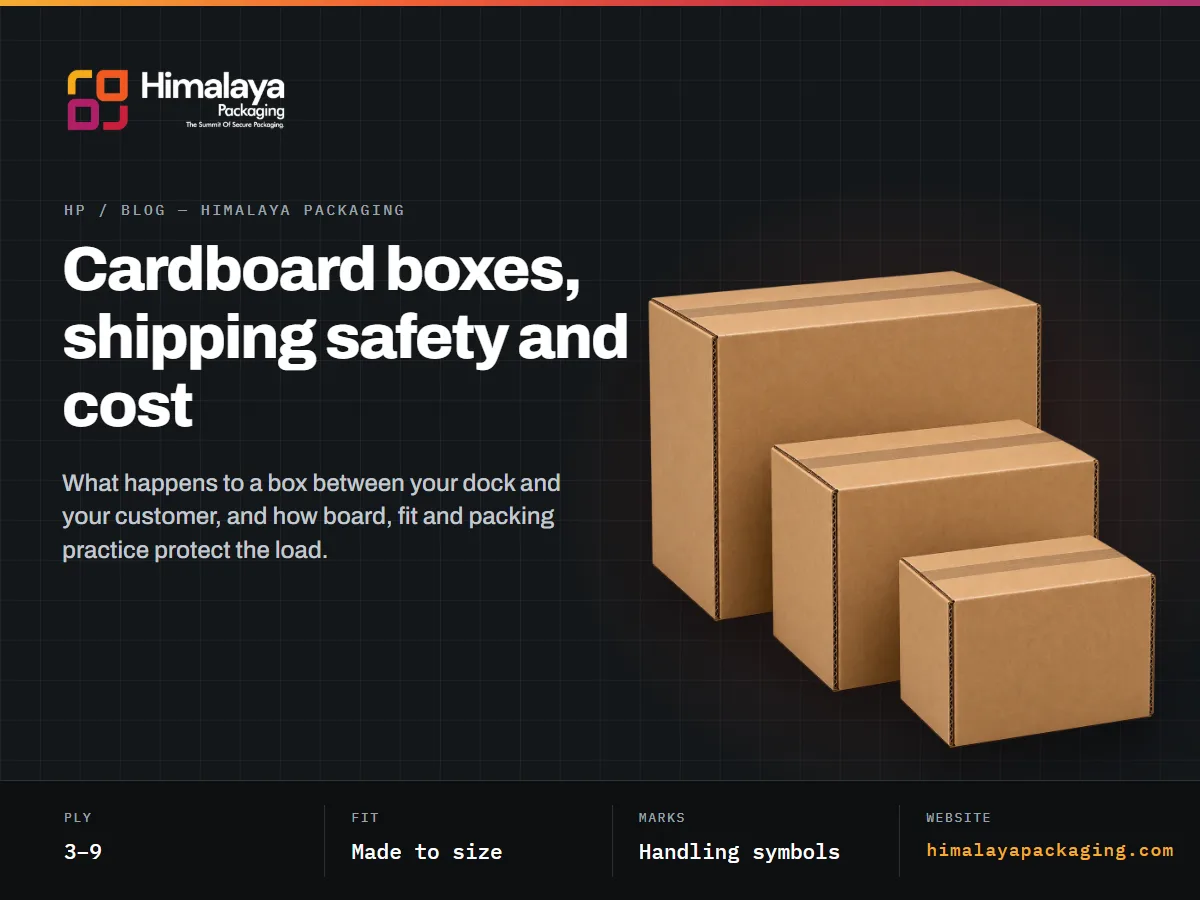
What most shippers call cardboard is corrugated board: flat liners glued to a fluted layer. Between your dock and your customer a box is loaded, stacked, shaken, dropped and stored, often in humid air. Each of those hazards has a specific answer in the box — and a cost if it is missed.
What happens to a box in transit
A shipment is loaded, stacked, carried, transferred and unloaded — sometimes several times — before it reaches the customer. Each stage brings its own hazard, and each hazard has a specific answer in the box:
| Hazard | What it does | What protects against it |
|---|---|---|
| Compression | Boxes lower in a stack crush | Ply and board grade chosen for the stack height |
| Drops | Corners crush, contents break | A snug fit, inserts and the cushioning of the flute |
| Vibration | Contents rub, loosen and wear | Fitted inserts and partitions |
| Puncture | Sharp edges pierce the wall | Multi-wall board and puncture-resistant flutes |
| Humidity | Board softens and loses strength | A grade with margin; coated board where needed |
How cardboard packaging improves shipping safety
- Structural strength. The fluted layers keep the liners apart, so the board is stiff and resists crushing — more walls for heavier loads.
- Cushioning. The flutes absorb part of the energy of knocks and drops before it reaches the product.
- Custom fit. A box made to the product leaves no room for it to move, which prevents most of the damage done by vibration and handling.
- Moisture allowance. Board chosen with humid routes and storage in mind keeps enough strength when it absorbs moisture.
Improving shipping efficiency
- Lower freight weight. Corrugated protects a load without adding much weight of its own.
- Less air. Couriers charge on volumetric weight — commonly length × width × height in centimetres divided by 5,000, though the divisor varies by carrier. A box sized to the product can cost less to ship than a larger one that weighs the same.
- Better pallet and container use. Box footprints planned around the pallet fit more units per load.
- Faster packing. Boxes arrive flat and are erected in seconds; standard slotted cartons close with tape.
Packing practice that makes the box work
The best box can still fail if it is packed badly. A few habits protect every shipment:
- Fill the box to its size — no empty space at the top for the contents to fall into.
- Put the heaviest items at the bottom, and hold them with inserts or partitions.
- Seal with tape across the centre seam and both edge seams — the H-seal. Our packaging tape guide covers this.
- Stack boxes corner on corner, and keep them within the pallet edge.
- Keep boxes off wet floors and out of the rain while they wait to be loaded.
Customisation for branding and function
- Print. Brand, product details and handling symbols, in up to four colours.
- Handles. Hand-holes for boxes that are carried.
- Partitions and inserts built around the product.
- Size and shape made to the product, not picked from a list.
Sustainability
Corrugated board is paper-based, widely recycled, and made in part from recycled fibre. The largest saving is usually in the specification: a box sized to its product uses less board and less freight than an oversized one.
Shipping boxes from Himalaya Packaging
We make corrugated shipping boxes from 3 to 9 ply at our plant in Bakrol Bujrang, Ahmedabad — made to size, with inserts, partitions and print as needed. Every order is specified in writing and proven on a physical sample before bulk production. See our corrugated boxes, or our shipping cartons for online sellers.
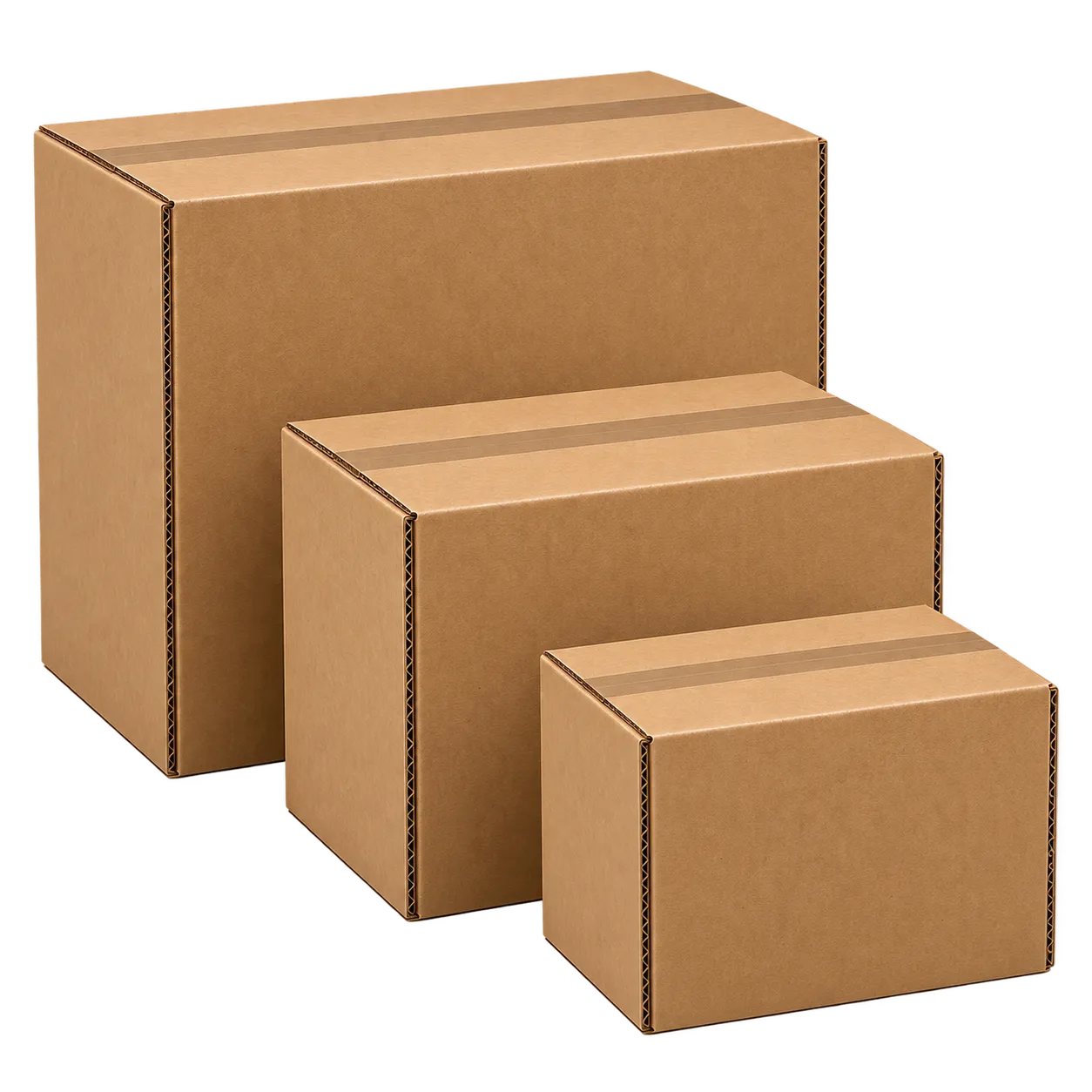 The product behind this article
Corrugated Boxes
The workhorse range, specified to the load rather than sold off a standard size list.
3–7 ply
A/B/C/E flute
120–250 GSM
The product behind this article
Corrugated Boxes
The workhorse range, specified to the load rather than sold off a standard size list.
3–7 ply
A/B/C/E flute
120–250 GSM