
The Importance of Pharmaceutical Packaging
Pharmaceutical packaging comes in layers. The medicine sits in its primary pack — a strip, a bottle, a vial — which goes into a printed unit carton, which travels in a corrugated shipper. Each layer has a different job. This article is about the shipper: the layer that carries the load through warehouses and trucks, and the one we make.
The three layers of pharmaceutical packaging
| Layer | Examples | Main job |
|---|---|---|
| Primary | Blister strip, bottle, vial, tube | Touches the medicine and protects it |
| Secondary | Printed unit carton, leaflet | Presents, identifies and informs |
| Tertiary | Corrugated shipper carton | Carries unit cartons through distribution |
The shipper never touches the medicine, but it decides whether the unit cartons arrive fit to sell. A crushed or scuffed unit carton is usually rejected, even when the medicine inside is undamaged.
Precision: a shipper that stays the same size
Pharmaceutical packing lines are set up around a fixed pack: so many unit cartons per shipper, in a fixed arrangement. A shipper that changes size between batches — even slightly — slows the line or leaves room for cartons to move. The answer is a shipper made to an approved specification, with every repeat order made to the same one, so the size stays constant from batch to batch.
Protection: stacking and storage
- Compression. Shippers are stacked in manufacturers’ stores, at distributors and at stockists. The board is chosen for the filled weight and the stacking height, so the shipper carries the load instead of the unit cartons inside.
- Humidity. Storage humidity weakens board over time, so the grade needs margin for the conditions in which shippers are stored.
- Partitions separate bottles and vials so they do not knock against each other.
- Fit. Unit cartons that fill the shipper exactly cannot shift and scuff.
Clear information on the shipper
Distributors check shippers against product and batch information at every step. Information that is the same on every shipper — product name, pack count, storage conditions, handling symbols — is best printed on the box, clearly and consistently. Information that changes every run, such as batch number and dates, is usually printed or labelled at packing, so it matches the goods inside.
What we do, and what we do not claim
Regulatory labelling and packaging requirements for medicines are the pharmaceutical company’s responsibility, set by its quality team. We make corrugated shippers to the specification and marks you give us. We do not claim pharmaceutical packaging certifications; if your quality team has requirements for shipper cartons, tell us and we will say plainly whether we can meet them.
Pharmaceutical shippers from Himalaya Packaging
We make shipper cartons for pharmaceutical manufacturers and distributors, typically in 3 or 5 ply, with partitions where needed and product and handling marks printed in our own plant in Ahmedabad — including shippers for export consignments. See our pharmaceutical shipper boxes. Printed unit cartons and mono cartons are supplied through our other website, boxmanufacturers.co.in.
 The product behind this article
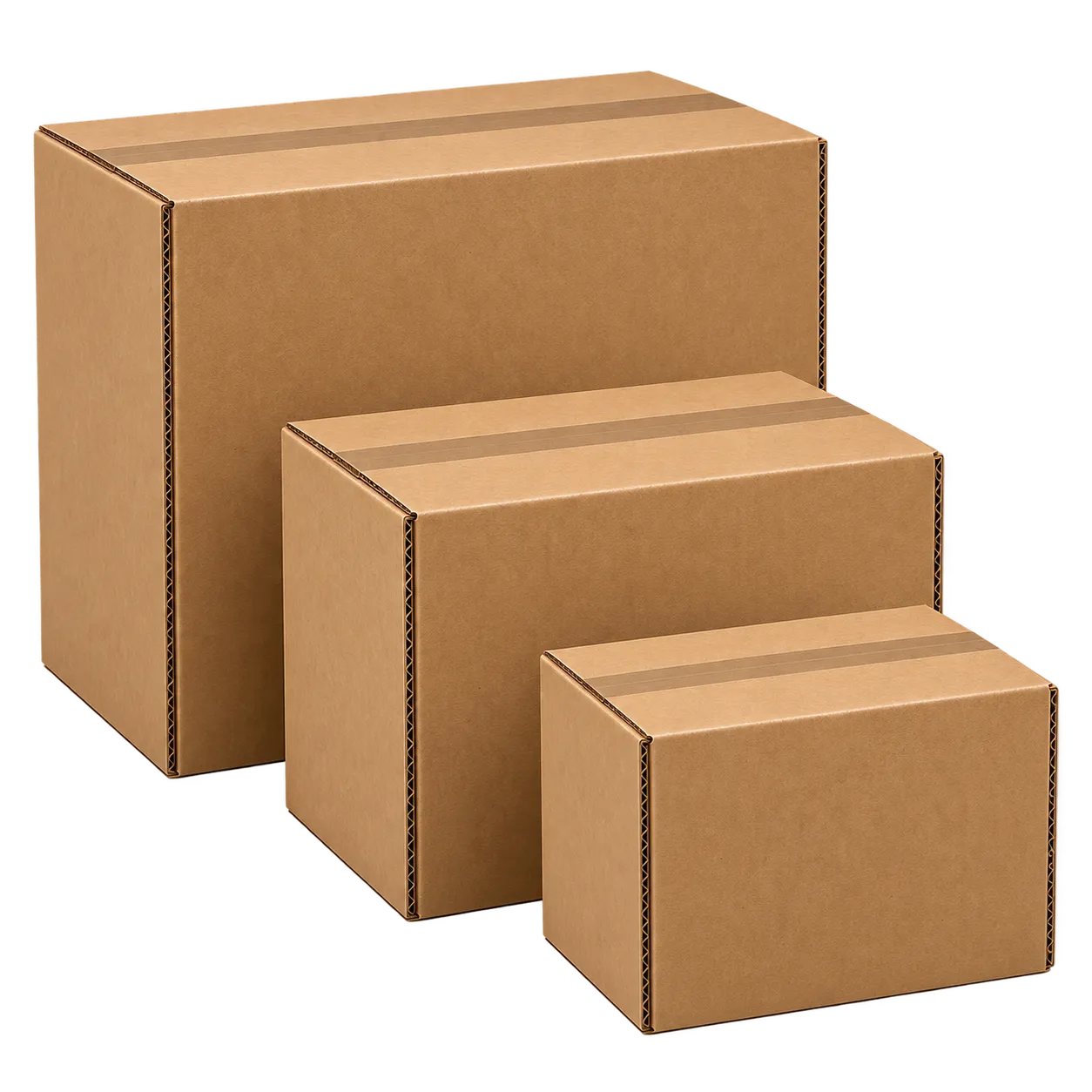
Corrugated Boxes
The workhorse range, specified to the load rather than sold off a standard size list.
3–7 ply
A/B/C/E flute
120–250 GSM
The product behind this article
Corrugated Boxes
The workhorse range, specified to the load rather than sold off a standard size list.
3–7 ply
A/B/C/E flute
120–250 GSM